After this round of GTC, I feel we have moved beyond the era of “smartphones and PCs driving demand.” The main battlefield of technology and geopolitics is shifting toward AI infrastructure, centered on compute, memory, and sovereign cloud. What I find truly worth watching is not just how many new products NVIDIA announced, but how it is locking Taiwan Semiconductor Manufacturing Company, Microsoft, and even the policy timing of Europe and China into a new shared timeline.
Let me start from the bottom layer. In my view, the true core of the AI economy is still Taiwan Semiconductor Manufacturing Company. The market widely expects that by 2027, NVIDIA could lock in more than 70% of TSMC’s 3nm capacity. The significance of this is profound. I don’t see it as simply “strong demand,” but rather a competition over timing rights, whoever places orders earlier secures compute capacity two to three years ahead, effectively locking in the development pace of the entire AI ecosystem.
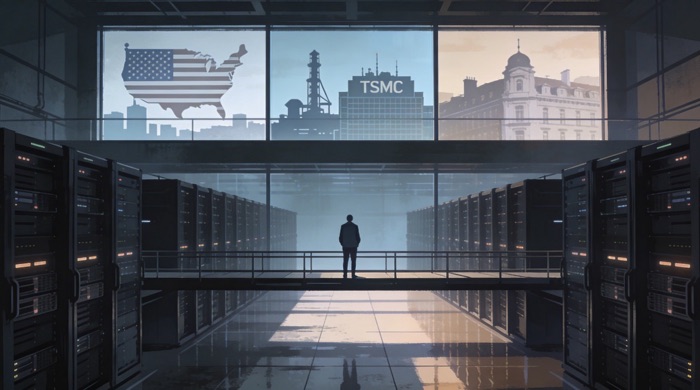
This is why I see Google’s relative lag in TPU capacity as a classic example. It’s not about lacking technology, but about slower timing. When Gemini usage started to rise and demand became visible, Google realized that wafer capacity had already been booked. This reinforces my belief that the key variable in AI is not isolated technological breakthroughs, but timing gaps.
Next, on compute architecture. I used to think GPUs would dominate for a long time, but signals from this GTC have made me reconsider. Jensen Huang emphasized that “Agentic AI is the new computer.” Combined with NVIDIA’s investment in Groq and its push into LPUs (inference chips), I believe the industry is shifting from a “training-centric” model to an “inference-centric” one.
If supply chain estimates are correct, LPU shipments reaching 4-5 million units in 2026-2027, growing more than 10x, this implies something important: future compute demand will no longer be concentrated in a few training clusters, but distributed across massive real-time applications. AI agents, real-time interactions, and even robotics all require low-latency inference. This will reshape data center architecture, for example increasing LPU density per rack from 64 to 256.
My own interpretation is simple: GPUs decide who trains the models, but LPUs will decide who controls the world.
Moving up the stack to software and ecosystem, I have some reservations but largely agree with the current direction. Microsoft and NVIDIA are pushing a unified platform at GTC, integrating Azure Foundry, models, and compute so enterprises can directly deploy agent systems. I believe this is redefining what “software” means.
In the past, we used computers by opening applications. In the future, we are more likely to assign tasks, and AI agents will call tools to complete them. This means the value of traditional SaaS will be compressed, because users no longer interact directly with software. I wouldn’t say software disappears, but it becomes “invisible,” turning into a function library behind AI.
The investment implication is clear: value is shifting from the application layer to models and compute platforms. It is no surprise that NVIDIA is not just building chips, but also launching Nemotron, Cosmos, and BioNeMo, and partnering with Adobe and Disney Research to penetrate creative and physical domains. I feel its goal is clear: moving from “selling shovels” to “defining the entire gold mine.”
However, this also brings side effects. I am particularly concerned about memory. Currently, around 30% of big tech capex is going into memory. Rising HBM prices are already impacting consumer electronics costs. I think this creates a crowding-out effect: the hotter AI infrastructure becomes, the more other tech demand may be suppressed.
Finally, I want to share my view on the US, China, and Europe. Here, I still think “time” is the key variable.
The US is clearly leading for now, as it controls NVIDIA, TSMC (through the supply chain), and platforms like Microsoft, OpenAI, and Anthropic. What I see is a high-speed closed loop: compute → models → applications → cash flow → reinvestment into compute.

China gives me a different impression. It is currently behind in speed and faces trust issues due to centralized control. But if AI development progresses more slowly than expected, China may gain time to complete its semiconductor supply chain and build a self-sufficient system.
As for Europe, I see its strategy as more about control, emphasizing sovereign AI, regulation, and local compute infrastructure. It may not lead in the short term, but in specific sectors such as industrial and automation, it could still build meaningful advantages.
Overall, my conclusion is more cautious than before. AI infrastructure is indeed booming, but this is not a one-way upward curve, it is a race highly dependent on timing. NVIDIA is no longer just selling chips; it is controlling the most critical middle layers of the AI “five-layer stack” (energy → chips → infrastructure → models → applications). The rise of agentic and physical AI will only strengthen its platform value.
So what I focus on now is not just technology or demand, but two things: who has locked in the next three years of capacity, and who can truly make agents the dominant computing interface.
Current AI stock valuations are highly narrative-driven. The real validation point is whether enterprises are willing to let agent systems manage actual revenue workflows. If that threshold is crossed, what now seems like expensive compute and cloud stocks may later be revalued as the next generation of “operating system” companies. Everyone knows a new computing platform is emerging, but the true standards and value distribution mechanisms have not yet been fully defined.

You must be logged in to post a comment.